Milyen problémát old meg
Az edzők gyakran több különálló eszközben kezelik az ügyfeleket, az edzésterveket, az időpontokat és a kommunikációt. Ez felesleges súrlódást okoz, megnehezíti a követést, és még az egyszerű műveleteket is manuális teherként hagyja meg.
Központosított rendszer nélkül az ügyféladatok és a coaching workflow-k egyre nehezebben követhetők következetesen, főleg ahogy nő az ügyfélszám.
Miért építettem
A Coachtimize-ot azért építettem, hogy túllépjek az elszigetelt feature-ökön, és egy valódi termékszintű workflow-ban gondolkodjak. Olyan projektet akartam, ahol a szerepkörök, az adatkapcsolatok és a napi használhatóság egyszerre számítanak.
A coaching domain ehhez jó terep volt, mert világos üzleti logikát, ismétlődő folyamatokat és elég komplexitást ad ahhoz, hogy az architektúra- és UX-döntéseknek is valódi súlya legyen.
A megoldás
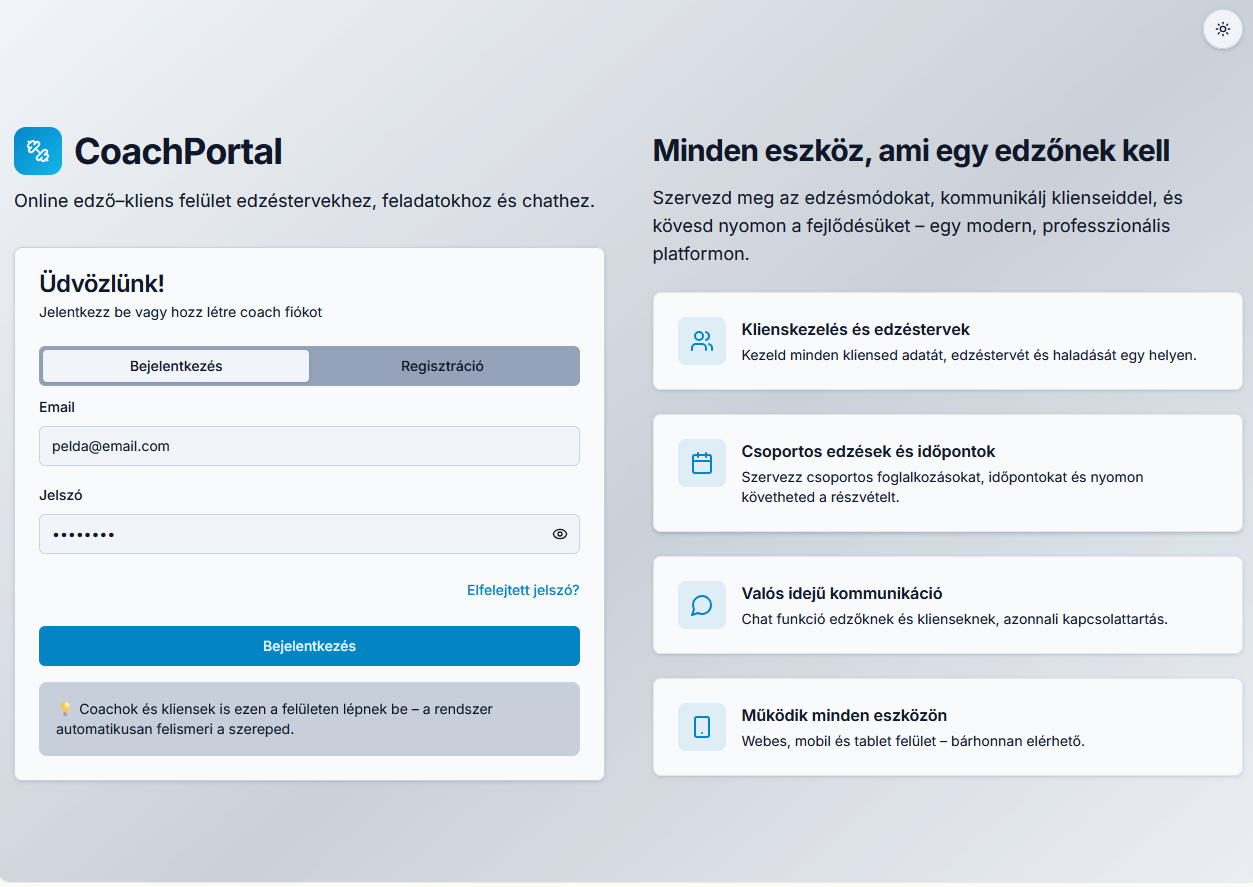
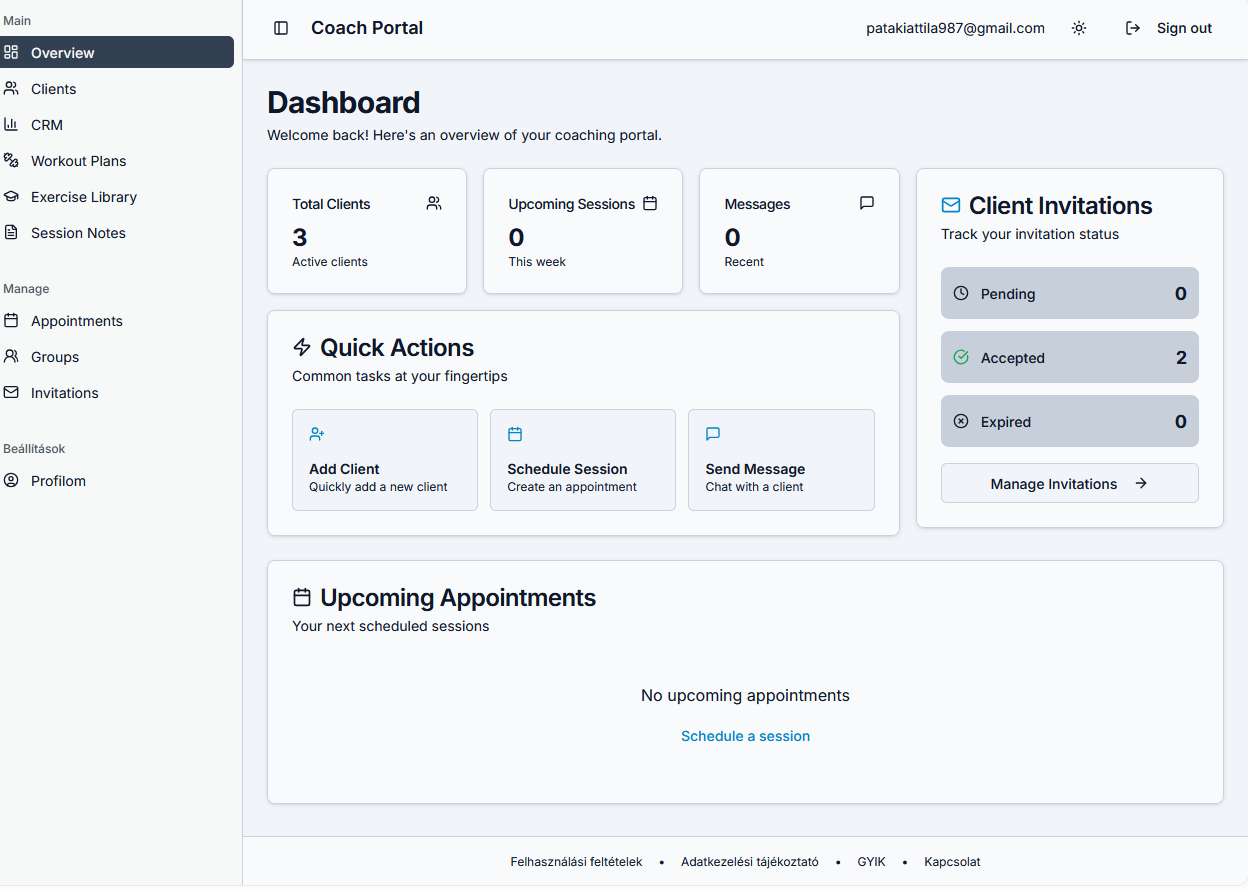
A Coachtimize azért készült, hogy ezeket a folyamatokat egyetlen rendszerbe rendezze. Segíti az ügyfélkezelést, az edzéstervek kiosztását, a hatékonyabb kommunikációt, és egy strukturált dashboardból teszi kezelhetővé a munkát.
A cél egy olyan termék volt, amely gyakorlatiasnak és valódi produktumnak érződik, nem csak technikailag működőnek.
Fő funkciók
- Ügyfélkezelés és strukturált profilok
- Személyre szabott edzéstervek kiosztása
- Hitelesítés és szerepkör alapú hozzáférés
- Dashboard a workflow áttekintéséhez
- Edző-ügyfél kommunikációs funkciók
Kihívások és gondolkodás
Az egyik fő kihívás egy olyan rendszer tervezése volt, amely támogatja a valódi coaching workflow-kat anélkül, hogy túlterhelt vagy nehezen használható lenne. Az ilyen platformhoz tiszta adatszerkezet kell, de közben érthető és hatékony frontend is.
Ugyanilyen fontos volt végiggondolni, hogyan áll össze a backend logika, a hitelesítés és a felhasználói műveletek egy koherens termékélménnyé.
Eredmény
Ez a projekt sokat erősített a full-stack gondolkodásomban, a backend struktúrában és abban, hogyan építsek rendszert egy valós felhasználási esetre.
Még fontosabb, hogy segített túllépni az elszigetelt feature-ökön, és workflow-kban, szerepkörökben és termékarchitektúrában gondolkodni.