What problem it solves
Coaches often manage clients, workout plans, appointments, and communication across multiple disconnected tools. That creates unnecessary friction, makes follow-up harder, and turns even simple operations into manual overhead.
Without a centralized system, client information and coaching workflows become harder to track consistently, especially when the number of clients grows.
Why I built it
I built Coachtimize to move beyond isolated features and think in terms of a real product-level workflow. I wanted a project where user roles, connected data, and day-to-day usability all matter at the same time.
The coaching domain was a strong fit because it has clear business logic, repeating processes, and enough complexity for architecture and UX decisions to actually matter.
The Solution
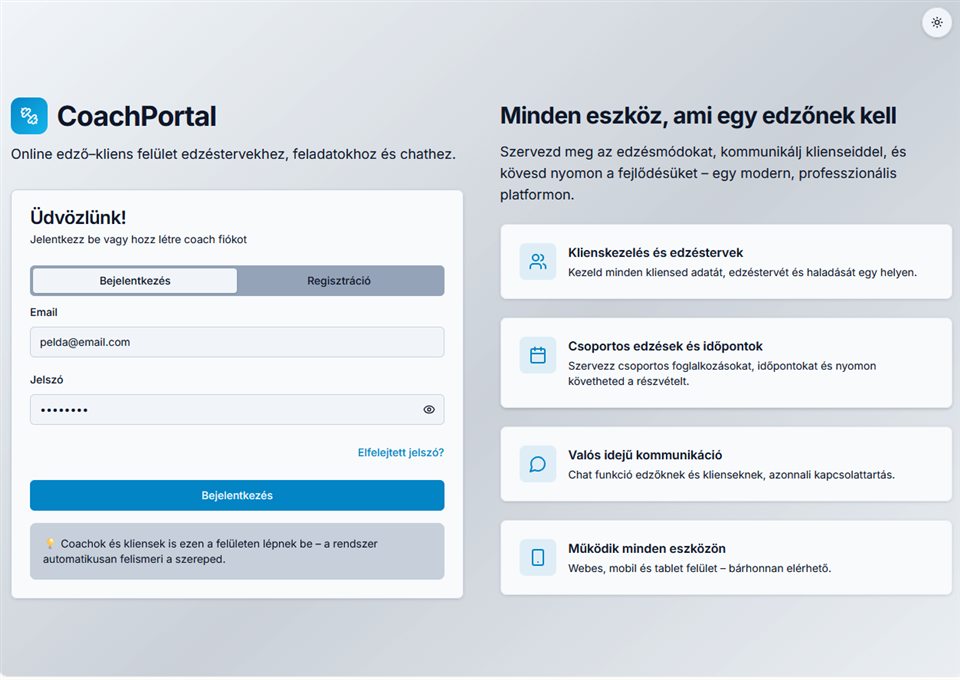
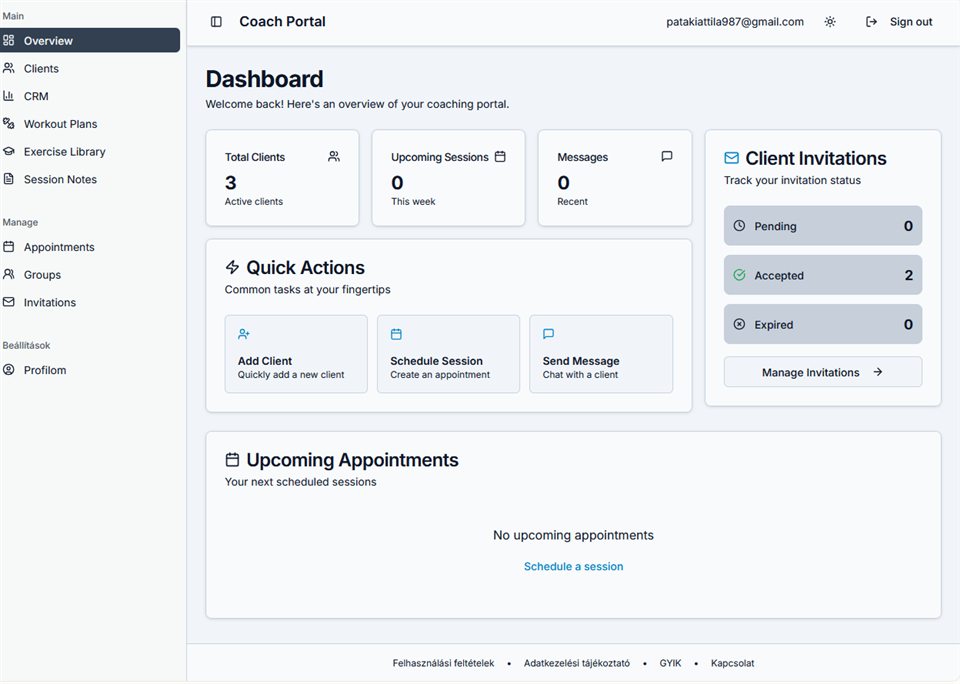
Coachtimize was built as a full-stack platform to bring those workflows into one system. It allows coaches to manage clients, assign workout plans, communicate more efficiently, and work from a structured dashboard instead of scattered tools.
The goal was to create something that feels practical and product-like, not just technically functional.
Key Features
- Client management and structured profile handling
- Workout plan assignment for individual clients
- Authentication and role-based access logic
- Dashboard interface for workflow overview
- Coach-client communication features
Challenges and Thinking
One of the main challenges was designing a system that supports real coaching workflows without becoming overloaded or hard to navigate. A platform like this needs clear data structure, but also a frontend that feels understandable and efficient.
Another important part was thinking through how backend logic, authentication, and user-facing actions connect into one coherent product experience.
Outcome
This project gave me stronger hands-on experience in full-stack thinking, backend structure, and building a system around a real-world use case.
More importantly, it helped me move beyond isolated features and think in terms of workflows, user roles, and product architecture.